Worlds
Astana does not need a slogan. It needs a bracket.
The senior worlds open in Kazakhstan on 24 October. A few weights will eat the week. The rest will be wrestling.
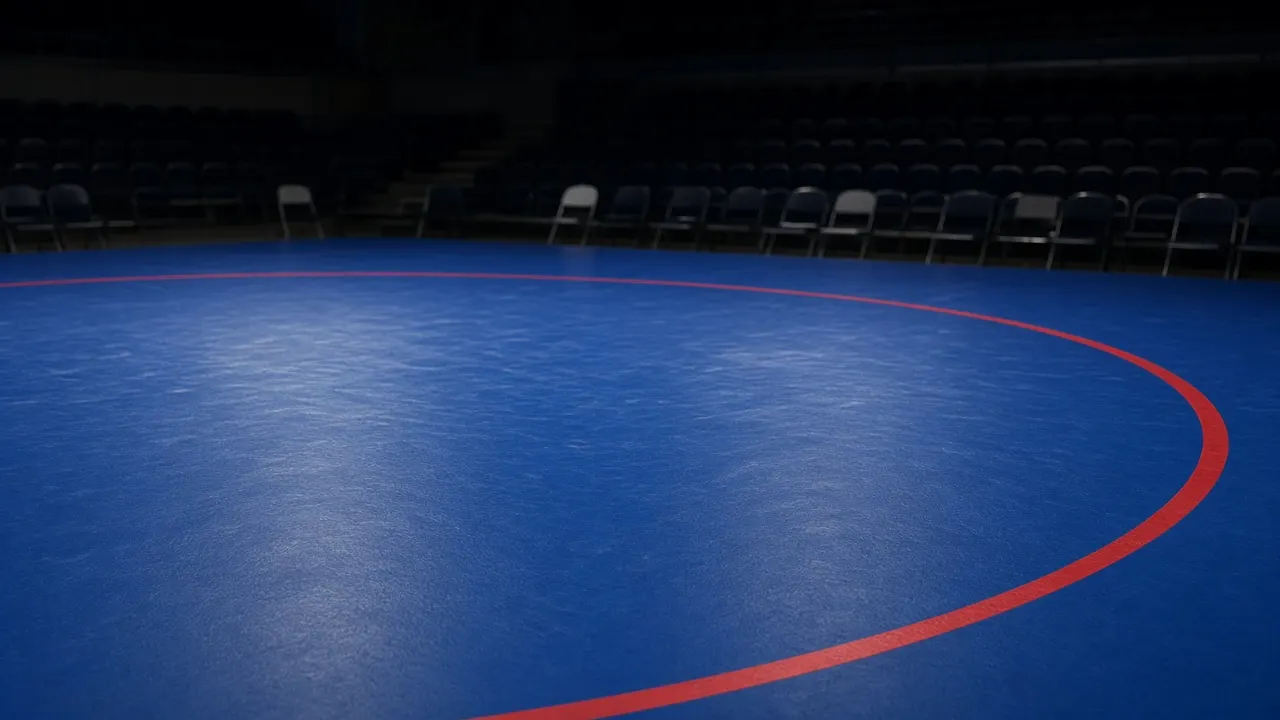
The mats in Astana are still empty, which is the honest state of a world championship three weeks out. From 24 October to 1 November the senior meet puts freestyle, Greco-Roman and women's wrestling in the same building. People will ask who is favoured. The better question is which room is actually deep.
Women's 57 kilograms has been that room for a while. It is not deep because a poster says so. It is deep because a quarter-final there can look like a final at a thinner weight, and because moving to 53 or 62 does not make the neighbours any kinder. If you only watch one women's session in Astana, start there. The women's wrestling page on this site is the longer version of that argument.
Middle of the men's card
Men's freestyle at 74 and 86 is where the styles collide in public. A low attacker meets someone who would rather score from the hands. You can see the argument in the first tie-up, before the scoreboard has an opinion. Heavyweight is a different broadcast. The first big score often becomes the only one that matters, which makes a cautious first period look like a plan and a second period look like a confession.
Greco-Roman will be read, as it usually is, through par terre. That is not a side plot. Ordered mat wrestling is where a stall turns into a lift, and where a bout that looked closed can swing on one grip. If Greco still feels opaque, the freestyle and Greco-Roman guide is shorter than a session and more useful than a highlight.
A world title is not won in the final. It is survived until the final.
NVWF will cover Astana as a desk, not as an official record. When we name a winner, it will come from the protocol. Until the first whistle, the useful work is narrower. Know the weights. Know which style you are actually watching. Do not treat a ranking-event win in July as a prophecy for October.
A useful way to spend the week before the draw is to pick one discipline and learn its Olympic weights, then notice which extra world-championship weights sit beside them. The extra weights are not a sideshow. They are where a country sometimes parks its second-best athlete, and where a future Olympic favourite sometimes hides while the poster weight is crowded. The weight chart is the boring page that makes that visible.
We will not publish a medal table in advance. Desks that do are usually recycling last year's final and hoping the sport cooperates. Astana has not cooperated with that habit often enough to make it a method. Show up for the session. Write what the hands did.