History
Helen Maroulis and the final that redrew a map
Rio, 53 kilograms, Yoshida on the other side. The first Olympic wrestling gold for an American woman was also just a match.
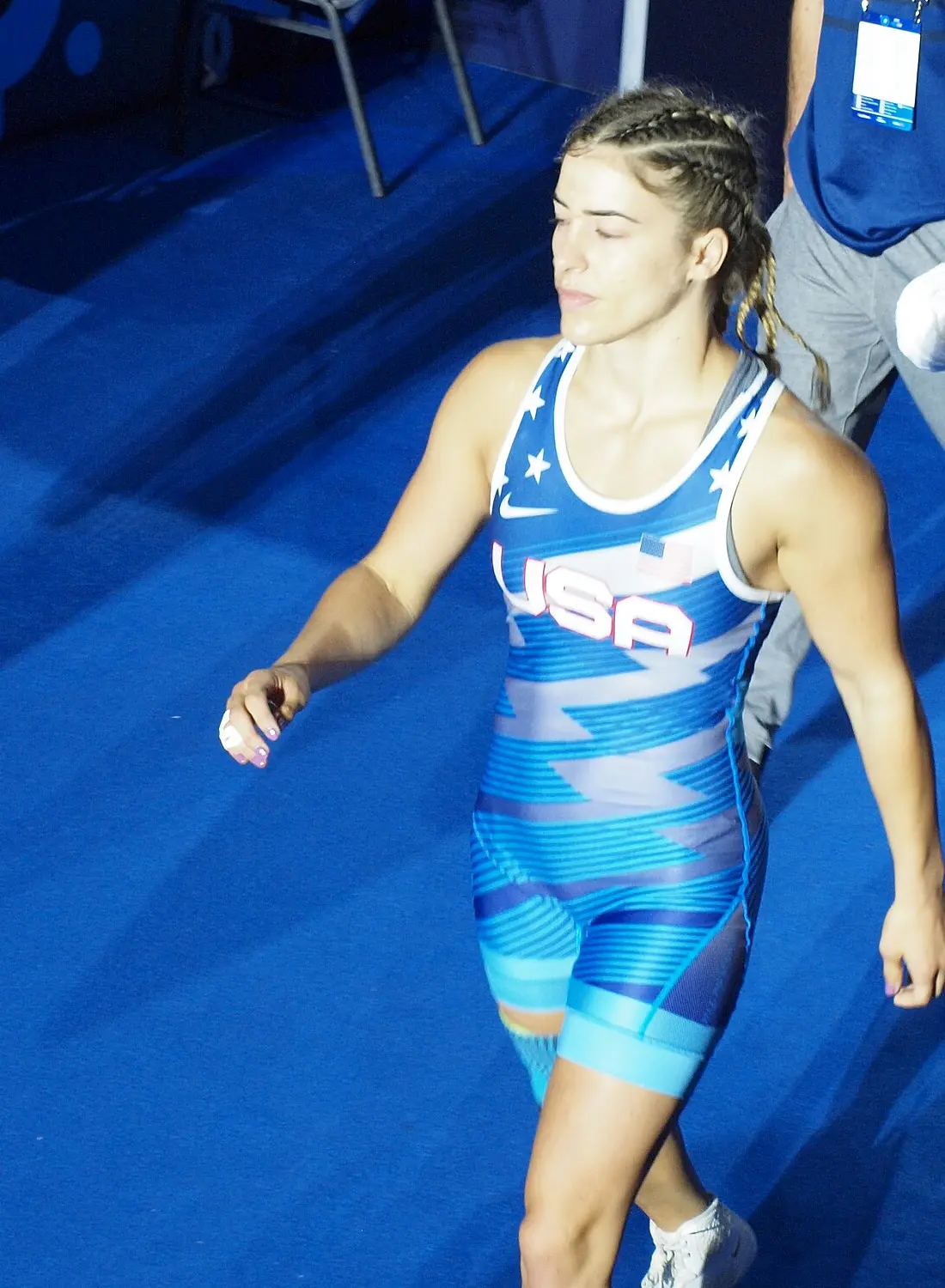
In Rio in 2016, Helen Maroulis won the Olympic final at 53 kilograms. She was the first American woman to take a wrestling gold. The sentence is now a caption. At the time it rearranged what the United States thought the sport was for. American wrestling had spent a century explaining itself through men's folkstyle and a shorter, prouder, more frustrated history on the international mat. Maroulis made a different sentence possible.
The opponent was Saori Yoshida, which is why the result lasted. Beating a three-time Olympic champion is not a bracket accident. It asked a wrestler from Maryland, already a world champion, to meet the standard of the sport and not merely an opponent. She did. The hand-fighting in that final is still the part worth stealing, if you are going to steal anything. The caption can take care of itself.
After the caption
She kept wrestling. She moved toward 57 kilograms. She won Olympic bronze in Tokyo. She won world titles, three of them, which is the sort of line that gets buried under Rio and should not be. A gold medal explains a country to itself. A bronze four years later explains the athlete. She was still in the hardest rooms, at a different weight, without the excuse of a first.
Tamyra Mensah-Stock's gold at 68 kilograms in Tokyo sits downstream of that map change, not as a sequel Maroulis authored. Programs do not work that neatly. What Rio did was make the photograph of an American woman on the top of a podium an ordinary photograph. Ordinary is the whole political achievement. The wrestling achievement was the final.
Ten years on, the useful way to watch the career is craft. A refusal to be tied up on someone else's terms. The nerve to attack the best final available. Those are still visible in the lighter weights, whether or not the athlete on the mat would cite 2016. The profile has the medals. The match, if you can find the full six minutes, has the rest.
The weight is part of the sentence
Rio was 53 kilograms. Tokyo was 57. Collapsing those into 'the lighter weights' is how a career gets turned into a vibe. 53 in 2016 meant walking into Yoshida's room. 57 later meant a different set of hips and a bracket that had become fashionable, which is a strange word for a sport and the right one for a weight that suddenly had too many good athletes.
The concussion years sit in the middle of that move, and they are not a subplot for colour. Time away from a sport like this is not a sabbatical. The entries go. The confidence that a tie-up is yours goes. Coming back and winning a world title is a second education, conducted in public, with people who were not away. If a profile skips that and sprints from Rio to the next medal, it is writing a poster.
What the final still offers a new viewer is simpler than the career. One athlete decided the best match in the sport was available, and wrestled as if availability were the same thing as permission. It was not permission. It was six minutes. They were enough.